Chapter 1 · Lesson 1.1
Units & Measurement
Give every number meaning.
Explore SI units, metric prefixes and conversions. Learn to measure carefully and communicate uncertainty.
Lesson Overview
A unit is an agreed reference for a quantity. A desk length of 1.2 m means the desk is 1.2 times the metre standard.
Start with observations, discover the seven SI base units, then use prefixes and conversions to express the same quantity in different ways.
Learning Objectives
- Distinguish qualitative and quantitative observations
- Name the seven SI base units
- Interpret common metric prefixes
- Convert length, mass and volume
- Distinguish accuracy from precision
- Report and estimate measurement uncertainty
Key Concepts
Conversion lab
Same amount, new unit
Moving to a smaller unit makes the number larger. Moving to a larger unit makes the number smaller.
1543 mm and 1.543 m describe the same amount.
Key Formulae
- Measured quantity
- Q = numerical value × unitExample: L = 1.2 × 1 m = 1.2 m.
- Length
- 1 km = 1,000 m1 m = 100 cm = 1,000 mm.
- Mass
- 1 kg = 1,000 gKilogram is the SI base unit of mass.
- Volume
- 1 L = 1,000 mL1 mL = 1 cm³; 1 L = 10⁻³ m³. Litre is accepted for use with SI.
- Percentage uncertainty
- (Δx / |x|) × 100%For a nonzero measured value x and absolute uncertainty Δx.
- Derived force unit
- 1 N = 1 kg m s⁻²Derived units combine base units.
Practice Questions
Observation
Words or numbers?
Physics starts by noticing. Some observations describe a quality; others measure a quantity.
Qualitative
Describe it
Uses words, qualities, or the senses. A number is not required.
Quantitative
Measure it
Uses numbers. Measured physical quantities usually include a unit; counts and dimensionless ratios are also quantitative.
Quick check · 1/4
“The metal feels cold.”
What kind of observation is this?
Choose an answer to reveal the explanation.
A shared language
Meet the SI system
Scientists use one agreed system so a measurement means the same thing in every classroom, laboratory, and country.
How far?
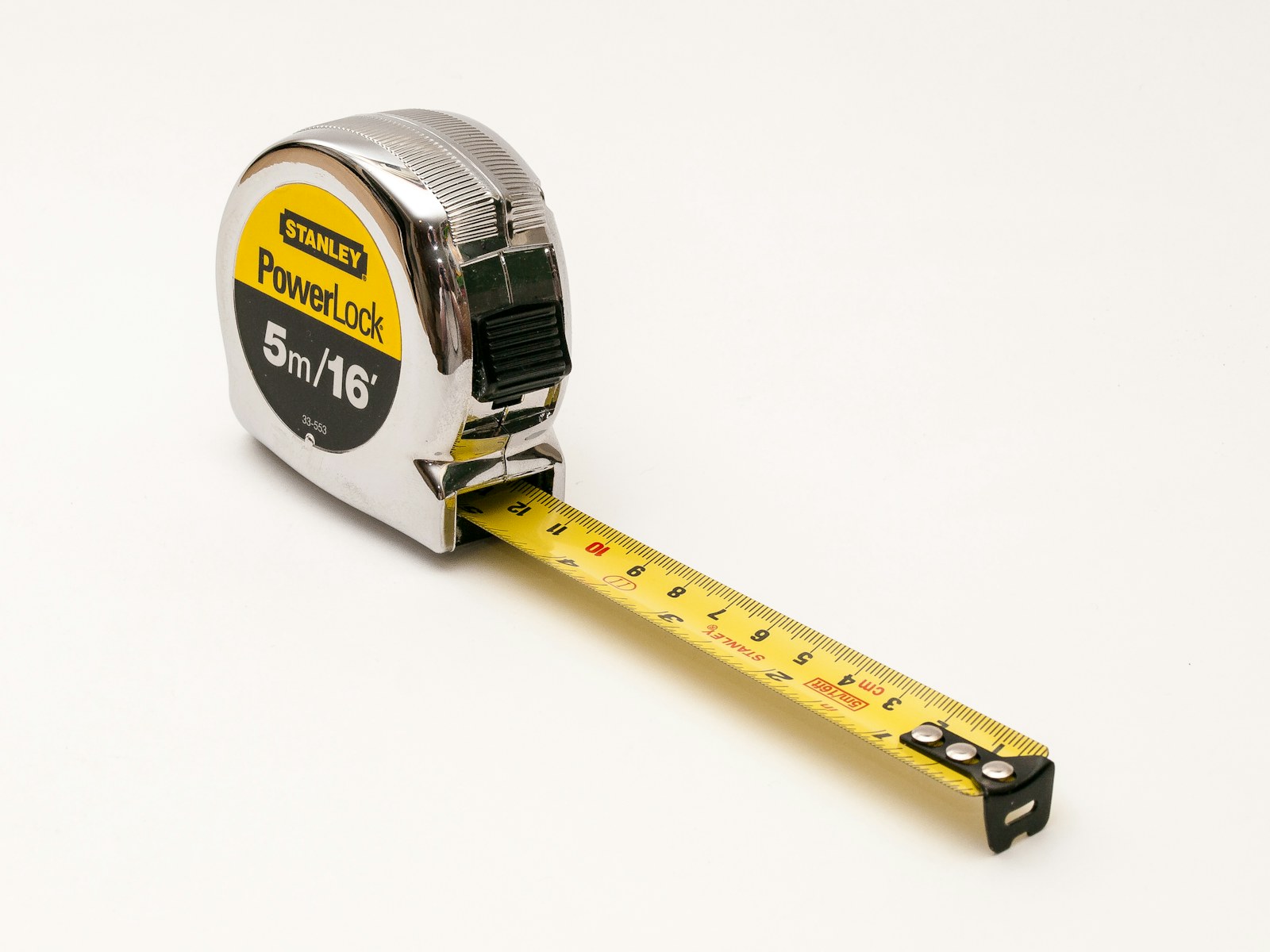
mmetre
Measured with a ruler.
Three more base units complete the set of seven:
- Electric currentampereA
- Amount of substancemolemol
- Luminous intensitycandelacd
Combine base units to describe more:
Scale up · scale down
A ladder of prefixes
Prefixes keep very large and very small measurements easy to read. Explore seven common scales from milli to kilo. The centre means no prefix; the full SI system includes additional prefixes.
Prefix
no prefix—10⁰How good is the number?
Every measurement carries a doubt
Stating that doubt is part of the measurement, not an apology for it.
Readings spread
Random error
Repeated readings scatter around a mean, which may also be biased. Examples include judging a pendulum or reading a needle that will not settle.
Reduce its effect: repeat and average. This does not remove systematic bias.
Readings shift together
Systematic error
Every reading moves the same way, perhaps because a balance is mis-zeroed or a scale is viewed from an angle.
Improve it: find and remove the cause.
Repeatability
Precise
Repeated values cluster closely, even when they are all wrong.
Truth
Accurate
Values lie close to the accepted or true value.
Further study · formal uncertainty propagation and resistivity (optional for IGCSE)
Begin with fractions, percentages and powers. Use the course guidance here to identify reviewed relationships and remaining practical requirements. Suitability for other courses and shared resources requires a separate review.
The following are conservative, first-order classroom estimates for small uncertainties. For independent standard uncertainties, statistical combination uses quadrature instead. Follow the convention specified in your course or experiment.
Add the absolute uncertainties.
mm + mmAdd the percentage uncertainties.
% + %Multiply the percentage uncertainty by the absolute value of the power.
n × %Exam diagrams for this topic1 figure to inspect and practiseQuestions, hints and marking points in one compact subsection.
See it. Read it. Work it.
These figures come from GioPhysics practice papers. Open one, decode the drawing, work the guided questions, then follow its link to the full paper question.
- 01
InspectRead the figure comment.
- 02
TraceFollow labels, arrows and axes.
- 03
AnswerWork one part at a time.
- 04
CheckReveal hints and marking points.
IGCSE
01Fig. 10.1Physical quantities and measurement techniques · DensityIGCSE
Figure comment
Fig. 10.1Two measuring cylinders drawn side by side, each with graduations up the wall and a curved meniscus. The first holds water alone, its surface at the 50.0 cm³ mark. The second holds the same water with the stone lowered in on a thread that runs up and out of the cylinder; the stone lies fully submerged near the base and the surface now stands at the 68.0 cm³ mark.
Read the comment once, then trace every arrow, label, axis or component in the drawing before opening the questions.
Guided questions 5 parts
Reading cue. The 50.0 cm³ is water alone and the 68.0 cm³ is water with the stone in, so the quantity everything turns on is the difference between the two levels, and it is printed on neither scale.
aDetermine Determine the volume of the stone from the two readings in Fig. 10.1.
Check answer 2 marks
- volume = 68.0 - 50.0 (1)
- = 18.0 cm³ (1)
bDetermine A second stone, identical to the first, is lowered into the same cylinder on a thread beside it. Determine the new reading of the water surface, and state one condition that must hold for your answer to be correct.
Check answer 3 marks
- the second stone displaces a further 18.0 cm³ (1)
- new reading = 68.0 + 18.0 = 86.0 cm³ (1)
- condition: both stones must be completely below the surface, and the water must not reach the top of the cylinder (1)
cExplain The cylinder in Fig. 10.1 is graduated in divisions of 1 cm³, so each of the two levels can be judged only to within half a division. Explain why the volume of the stone is known far less precisely than either reading, supporting your answer with figures.
Check answer 3 marks
- each reading may be out by up to 0.5 cm³, so their difference may be out by up to 1 cm³ (1)
- 1 cm³ in 18.0 cm³ is about 6% (1)
- 0.5 cm³ in 68.0 cm³ is less than 1%, so subtracting two large readings to obtain a small difference magnifies the error (1)
dSuggest A larger stone is to be measured, but lowering it into the cylinder drawn in Fig. 10.1 would take the water above the top graduation. Suggest a change to the method that still uses the same cylinder, and explain why the volume obtained is still correct.
Check answer 3 marks
- pour out some water first, so that the starting level is much lower, for example 20 cm³ rather than 50.0 cm³ (1)
- enough water must remain to cover the stone completely once it is lowered in (1)
- only the difference between the two readings is used, and that difference does not depend on the starting level (1)
Transfer challenge
A metal statue is far too large for any measuring cylinder. It is lowered on a thread into an overflow can that has been filled until water just stops running from the spout, and the water pushed out is collected in a measuring cylinder, which then reads 240 cm³. Determine the volume of the statue, and explain why the can must be left to stop dripping before the statue is lowered in.
Check answer 4 marks
- volume of statue = 240 cm³ (1)
- the water pushed out has the same volume as the part of the statue below the surface, so the statue must be fully submerged (1)
- if the can is still over-full, water standing above the level of the spout runs out on its own (1)
- that extra water would be collected as well and the volume obtained would be too large (1)
Worked Examples
Convert a measured length
A cable is 1,543 mm long. Express its length in metres.
- Use 1 m = 1,000 mm.
- 1,543 mm × (1 m / 1,000 mm) = 1.543 m.
- Check: the metre is larger, so the numerical value is smaller.
Convert a volume into cubic metres
A beaker contains 250 mL.
- 250 mL ÷ 1,000 = 0.250 L.
- 1 L = 10⁻³ m³, so 0.250 × 10⁻³ = 2.50 × 10⁻⁴ m³.
- Also, 1 mL = 1 cm³, so the volume is 250 cm³.
For cubed units, cube the length factor: 1 cm³ = (0.01 m)³ = 10⁻⁶ m³.
Quick Quiz
Five questions. Answers stay in this open page only.
Downloads & Resources
The extended uncertainty section is available on this page.
Try a Game
 Vector Run
Continue exploring motion in the chapter’s interactive game.
Play now →