
Cambridge Physics 0625 · Core & Extended
IGCSE Physics
Find a topic, explore its models and put your understanding to work.
Focus on the Core statements in your syllabus. Shared topic headings stay visible; linked resources can contain Supplement content or enrichment. This choice does not hide topic headings.
Selected topic 1.1: Physical quantities and measurement techniques
IGCSE Topic 1.1
Physical quantities and measurement techniques
Use the SI units, instruments, precision, and measurement sections.
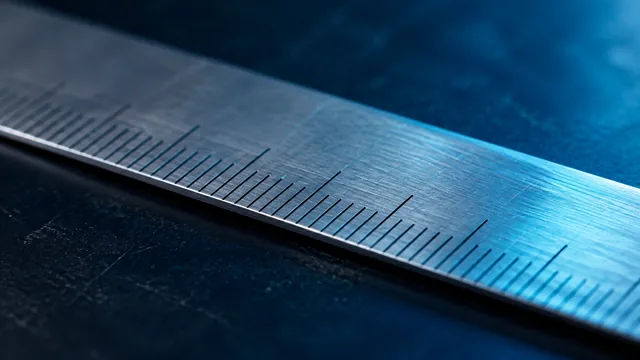
Topic inventory—not a complete coverage claim. Each linked activity, question set and download needs its own review.
Choose your next step
Open the mapped lesson
Use the SI units, instruments, precision, and measurement sections.
Open lesson →Extra challenging questions
Connect several ideas, explore supplied data, and compare your reasoning with a worked solution.
Focus on the Core statements in your syllabus. Shared topic headings stay visible; linked resources can contain Supplement content or enrichment.
Course at a glance Board, papers and exam series
IGCSE information
- Exam board
- Cambridge International
- Syllabus
- 2026–2028 · Version 2
- Routes
- Core and Extended
- Core papers
- Papers 1 + 3
- Extended papers
- Papers 2 + 4
- Practical skills
- Paper 5 or Paper 6, for either route
- Exam series
- June and November; March in India
Complete Cambridge topic directory 6 syllabus groups · 29 mapped topics
1. Motion, forces and energy
Measurement, movement, interactions, momentum, energy, and pressure.
2. Thermal physics
Particle models, temperature, thermal properties, and energy transfer.
3. Waves
Wave properties, light, the electromagnetic spectrum, and sound.
4. Electricity and magnetism
Magnetic effects, electrical quantities, circuits, safety, and induction.
5. Nuclear physics
Atomic structure, radiation, decay, and half-life.
6. Space physics
The Solar System, stellar evolution, and the Universe.
Core, Extended & assessment explained Paper choices, timings and practical skills
Core route
Study the Core statements. Take Paper 1 (multiple choice) and Paper 3 (theory), plus either practical-skills paper. Available grades: C–G.
Extended route
Study Core plus Supplement. Take Paper 2 (multiple choice) and Paper 4 (theory), plus either practical-skills paper. Available grades: A*–G.
Take Paper 5 or Paper 6, not both. Practical skills contribute 20% on either route. Your school confirms your entry. Check the official assessment overview ↗
Assessment objectives
AO1 · Knowledge with understanding: 50%. AO2 · Handling information and problem-solving: 30%. AO3 · Experimental skills and investigations: 20%.
Syllabus guidance & sources Coverage notes and other exam boards
A clear map, with room to explore
The 11 visual topic groups organise this site’s 29 mappings; they are not Cambridge’s official group numbering. The three study tools develop skills across topics. Core and Supplement distinctions can occur within a topic heading, so changing the route selector updates guidance without hiding the shared headings. Momentum is Supplement content. Linked lessons may include enrichment—follow their scope notes and your teacher’s guidance.
This is the Cambridge 0625 map. Learners taking Cambridge 0972, Edexcel 4PH1, AQA 8463 or OCR J249 may find shared concepts useful, but should follow their own specification rather than treat this as an equivalent course map.
- GioPhysics IGCSE course guide →
- Official Cambridge Physics 0625 course ↗
- Official 2026–2028 syllabus, Version 2 (PDF) ↗
- Official syllabus update (PDF) ↗
- Cambridge past papers & specimen materials ↗
Checked 8 September 2026. GioPhysics is independently developed and is not endorsed by Cambridge International. Our questions, practice papers and teaching materials are original resources, not official Cambridge past papers.
Questions & study tips Make the most of your next practice session
Where should I start?
Choose the topic you are studying in class. Open Learn for the explanation, Explore for a mapped activity, then Practise to test your understanding. Teach opens the matching classroom slides.
How do I improve after a mistake?
Try a question before opening its answer. Find the first step where your reasoning changed, explain that step in your own words, then try a related problem.
Where are the past papers?
Use Cambridge’s official collection for released papers. GioPhysics offers original practice papers and 518 original IGCSE questions with worked answers.
Can teachers download the slides?
Yes. The presentation library includes 29 topic-matched editable decks. The Teach button opens the corresponding PowerPoint for each mapped topic.